
Seasickness on a Yacht: Prevention & Practical Tips
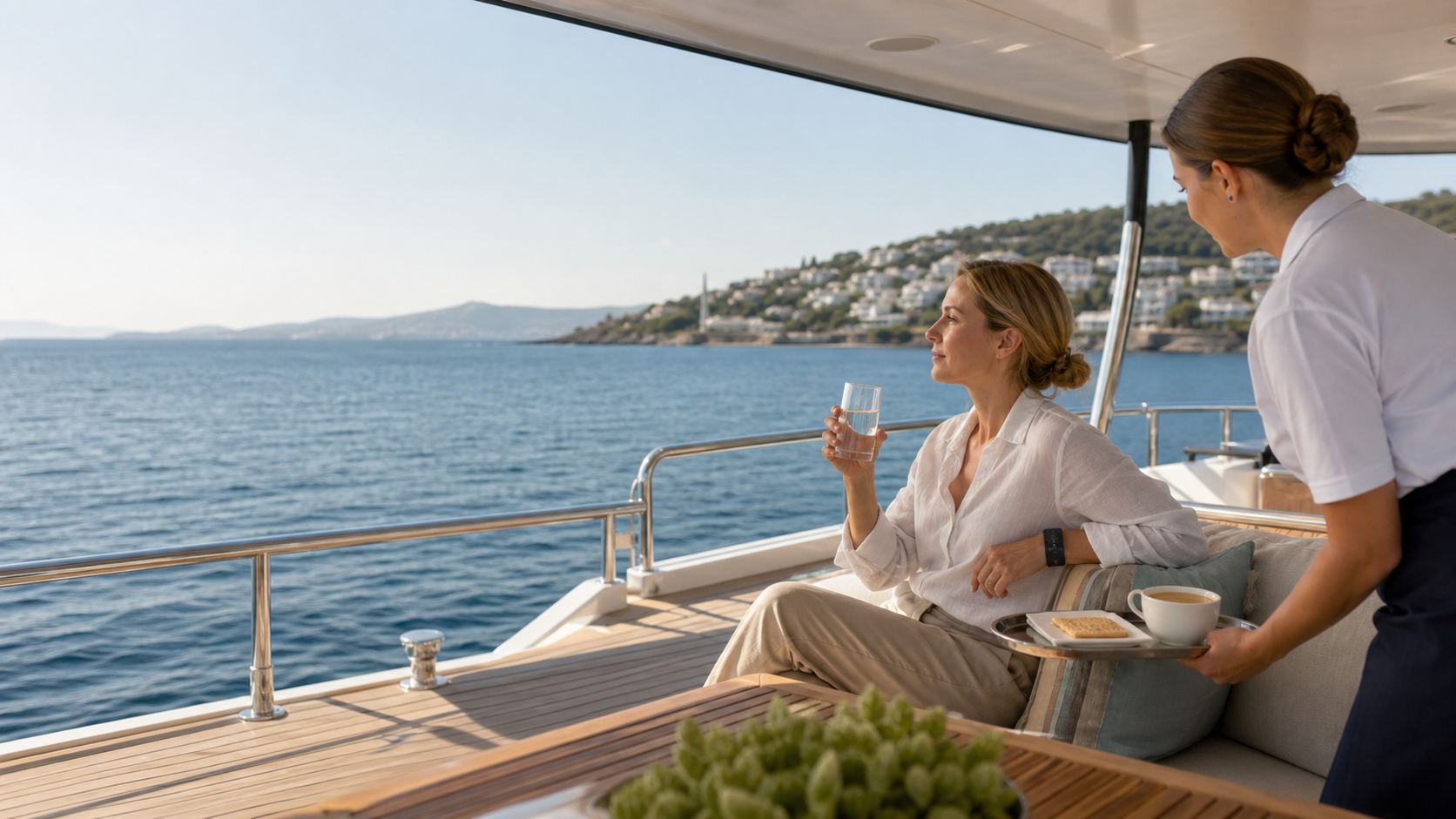
Planning a holiday on the Turkish Riviera is incredibly exciting, but we know that for some guests, the thought of being on the water comes with a slight worry. If you are prone to motion sickness, you might be wondering how to manage seasickness on a boat while still enjoying your time exploring the coastline.
The good news is that the Aegean Sea around Bodrum is generally very calm, especially during the summer months. Furthermore, with the right preparation and a few smart choices, you can minimise the risk entirely. We want you to feel completely comfortable and relaxed during your journey, so we have gathered our best practical tips for keeping motion sickness at bay.
Choosing the Most Stable Vessel
If motion sickness is a worry on your mind, your choice of vessel makes a significant difference. Not all boats move through the water in the same way.
For the highest level of stability, a catamaran is an excellent choice. Because they rest on two hulls, catamarans do not lean heavily to one side while sailing. They remain relatively flat and stable, which is incredibly reassuring for guests who are sensitive to movement.
Alternatively, our traditional wooden gulets are very heavy, wide vessels. This substantial weight allows them to cut smoothly through small waves rather than bouncing over them. If you are unsure which option is best for your group, our team can guide you toward the most stable yachts in our fleet to ensure a highly comfortable trip.
Planning a Gentle Cruising Route
When you book a private charter with us, you are not locked into a rigid, uncomfortable schedule. Your captain's primary goal is your comfort and safety.
If you are concerned about the water, let your captain know on the first morning. They can easily tailor your itinerary to stay within highly protected areas, such as the sheltered coves of the Gulf of Gökova or the tranquil bays near Göcek.
Additionally, the sea is almost always calmest in the early morning. Your captain can plan to do the main cruising while you are waking up or having breakfast, dropping anchor in a quiet, flat bay well before the afternoon coastal breezes pick up.
Practical Seasickness Prevention Strategies
If you ask our local crew how seasickness passes, they will share a few tried and tested maritime tricks. The most effective strategy is always prevention.
Firstly, stay above deck when the yacht is moving. Fresh air and a clear view are your best defences. If you start to feel unwell, look out at the horizon rather than the water close to the hull. Staring at a fixed, distant point helps your brain reconcile the movement your body is feeling.
Avoid going down into your cabin to read or look at your phone while the yacht is underway. Once the captain has dropped the anchor securely in a calm bay, you can safely retreat to the indoor spaces without worry.
Food, Drink, and Natural Remedies
What you consume before and during your journey plays a huge role in seasickness prevention. It is best to avoid overly heavy, greasy meals or excessive alcohol the night before you set sail.
On the morning of your trip, opt for a light, dry breakfast. Our private chefs are very accustomed to preparing gentle, stomach-friendly meals for guests who request them. Staying hydrated with plenty of fresh water is also crucial, particularly under the warm Mediterranean sun.
Many sailors swear by natural ginger. Sipping on ginger tea or snacking on ginger biscuits can settle a nervous stomach wonderfully. You might also consider bringing acupressure wristbands, which many of our guests find highly effective without the need for medication.
Frequently Asked Questions
-
Yes, it is always a good idea to pack your preferred over-the-counter remedies just in case. Remember to take them well before you set sail, as they are much more effective at preventing sickness than curing it once it starts. Please note that our crew cannot dispense personal medication.
-
The most stable part of any yacht is usually the centre, towards the back (the aft deck), close to the waterline. Avoid sitting right at the very front (the bow) or on the high upper decks (the flybridge) while moving, as these areas experience the most exaggerated motion.
-
Absolutely. Our professional crews are highly experienced and exceptionally compassionate. If you feel unwell, simply tell them. The captain can adjust the speed, find a closer anchorage, and the hostesses will bring you cold water, ice packs, and ensure you are comfortable in the fresh air.
-
With a careful choice of yacht, a smart itinerary, and a few practical tricks, there is no reason motion sickness should stop you from experiencing the beauty of the Turkish Riviera.

